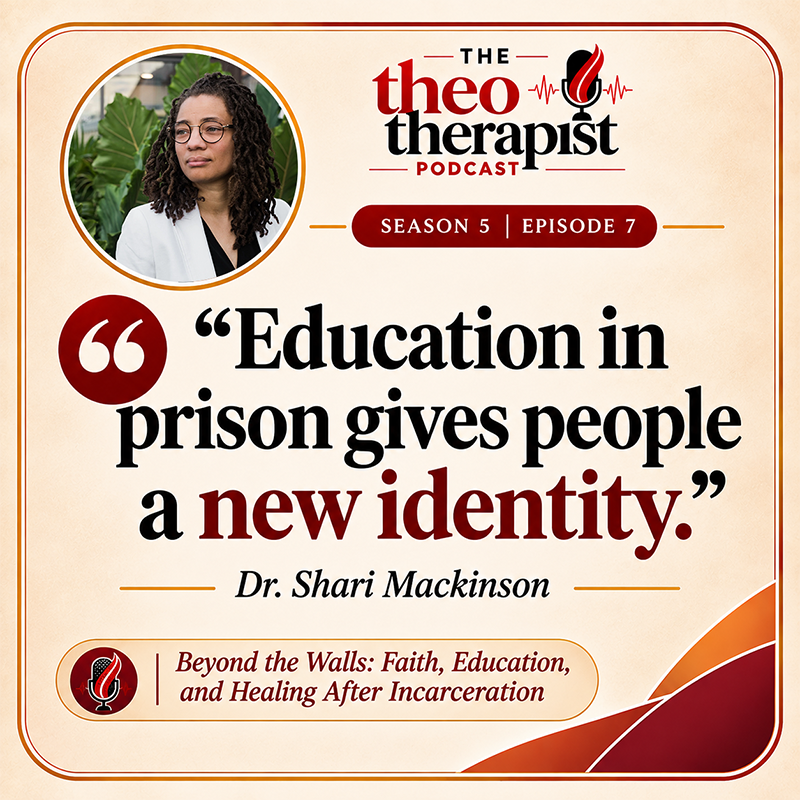

In this episode of The TheoTherapist Podcast, Dr. Ca Trice Glenn welcomes Dr. Shari Mackinson, an ethicist, educator, and director of a higher education in prisons program at Morehouse College.
The TheoTherapist Podcast, where we explore the intersections connecting theology and mental health. The TheoTherapist podcast is hosted by Dr. Ca Trice Glenn, a practical theologian and licensed therapist.
Episode Timeline
02:20 Faith, Education, Dignity, and Hope
03:36 Growing Up with a Calling to Serve
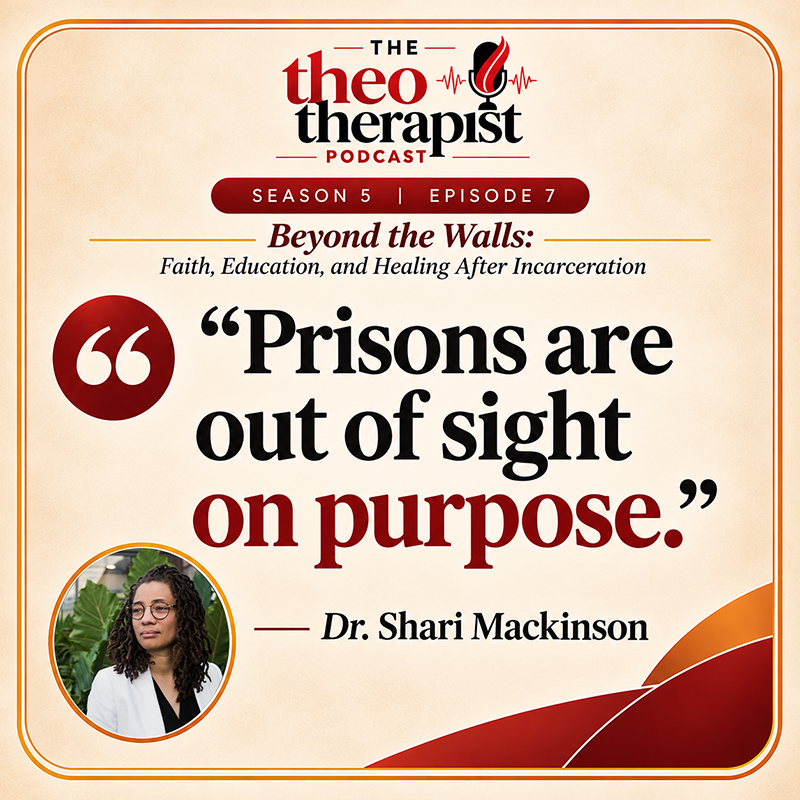
05:35 Why Prisons Are Hidden from Public View
06:50 Serving Marginalized Communities
08:54 Seminary, Chaplaincy, and Prison Education
09:37 Teaching Theology Inside Women's Prisons
11:48 The Journey to Morehouse College
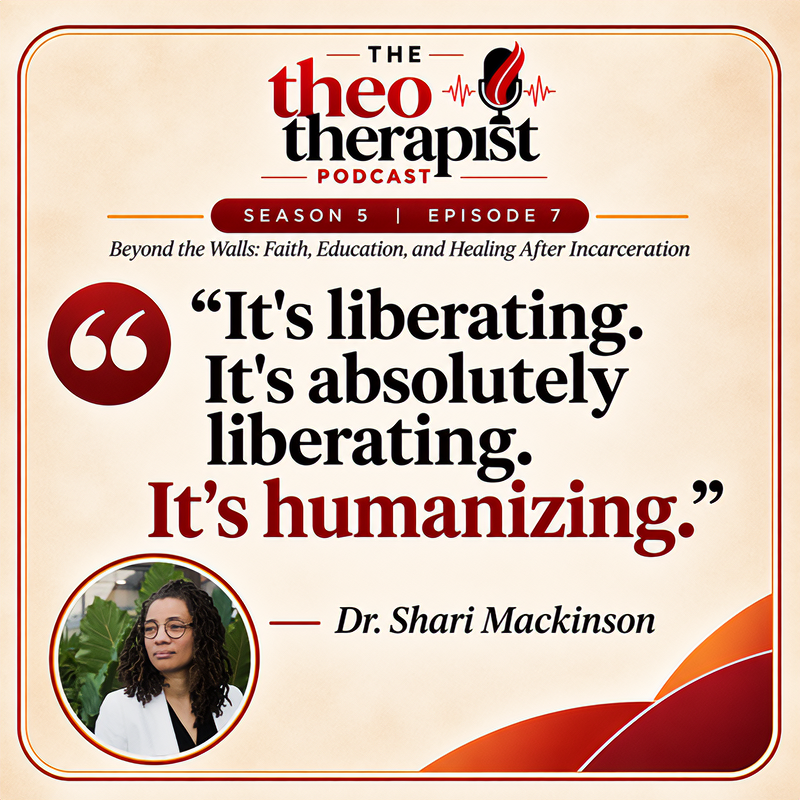
12:58 Education as Liberation and Humanization
15:23 Why Teaching in Prison Is Life-Giving
16:25 The Emotional and Spiritual Weight of Incarceration
18:17 Community and Humanity Behind Prison Walls
19:59 Small Acts of Care and Compassion
21:33 Education, Recidivism, and New Opportunities
22:45 Becoming a Student and Scholar
24:28 Education Changes Identity and Perspective
25:31 Civic Education, Voting, and Social Awareness
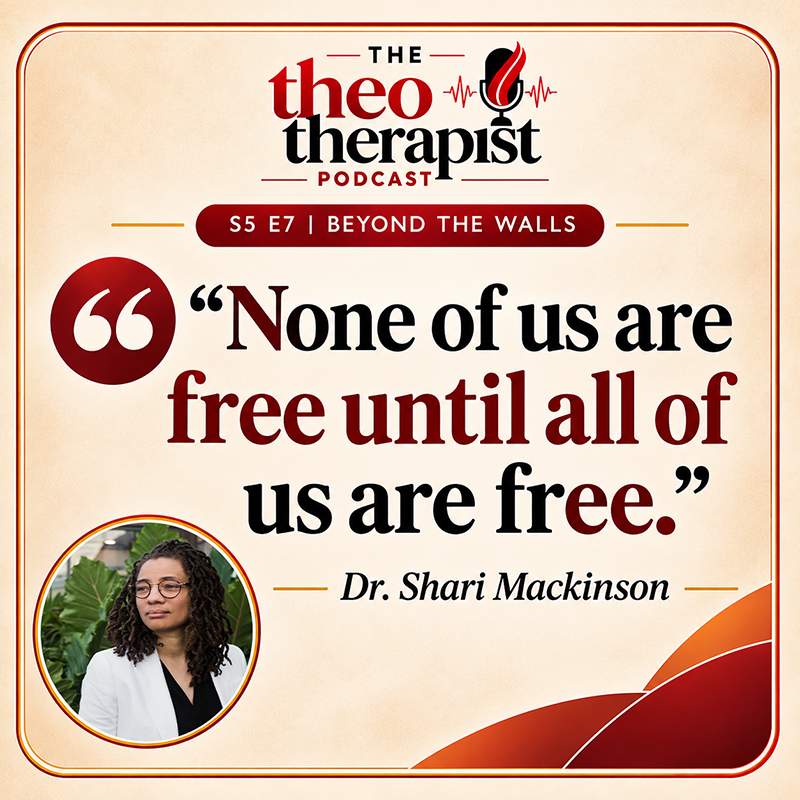
27:00 Education as a Path Toward Liberation
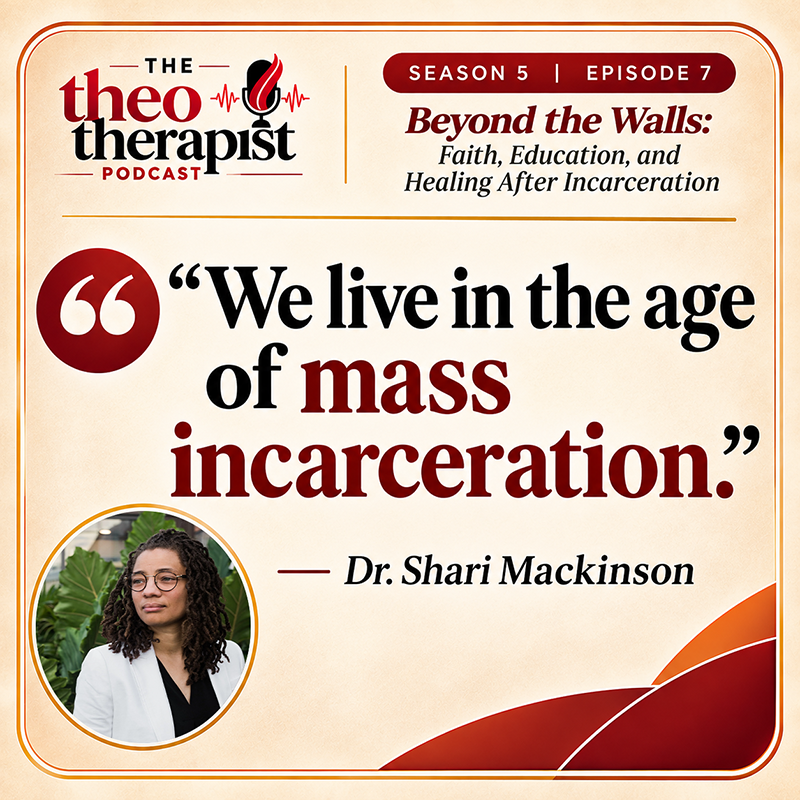
29:04 How Incarceration Affects Every Congregation
31:12 Challenging Stigma in Faith Communities
31:45 Practical Support, Employment, and Reentry
34:34 Beyond Preaching: Meeting Tangible Needs
37:28 Seeing Incarcerated People as Whole Persons
39:08 Dr. Glenn's Closing Reflection
How Can Education Restore Dignity Behind Prison Walls?
What does it mean to experience freedom through education while remaining physically incarcerated? How can churches and faith communities support people who are incarcerated, those returning home, and the families who continue to care for them?
In this episode of The TheoTherapist Podcast, Dr. Ca Trice Glenn welcomes Dr. Shari Mackinson, ethicist, educator, and director of a higher education in prisons program at Morehouse College.
Their conversation examines the intersection of faith, education, justice, and human dignity. Drawing from her years of prison chaplaincy, theological education, and college-level teaching, Dr. Mackinson offers a perspective on a community too often overlooked by society.
Called to Serve Beyond the Walls
Dr. Mackinson traces her commitment to incarcerated people back to childhood, when her family and church taught her that faith should lead to meaningful service.
Her theological studies and prison chaplaincy experiences eventually led to teaching and directing educational programs inside women’s correctional facilities.
Today, her work continues through higher education in prisons, creating opportunities for incarcerated students to engage in college-level learning and develop new understandings of themselves and their communities.
Education as Liberation
One of the episode’s most compelling moments comes when Dr. Mackinson recalls a student who explained that attending theology classes allowed her to temporarily forget she was in prison.
Education offered more than information or academic credentials. It provided space to think, question, participate, and experience a sense of freedom in an otherwise restrictive environment.
Dr. Mackinson explains that prison education can also help students develop new identities. Rather than being defined solely by incarceration, they become students, scholars, and role models for their children and families.
Finding Humanity Behind Prison Walls
The discussion also addresses the mental, emotional, and spiritual weight of incarceration.
Dr. Mackinson describes the isolation created by correctional environments while sharing examples of genuine community and compassion among incarcerated students.
In one memorable story, a student quietly repairs her broken glasses. In another, students offer small acts of care when she is sick.
These experiences reveal the resourcefulness, generosity, and relationships that exist behind prison walls, challenging assumptions about the humanity of incarcerated individuals.
Education, Identity, and Community Transformation
Dr. Mackinson discusses how education can contribute to improved opportunities after incarceration. She also emphasizes that its value cannot be reduced to recidivism statistics.
For students facing long sentences, education can still change how they understand themselves, their families, and the world around them.
The conversation includes an example of a student whose coursework on race and the law changed his perspective on voting and civic responsibility.
Education becomes a way of developing language, perspective, and the ability to influence others.
The Responsibility of Faith Communities
Dr. Mackinson offers a direct challenge to churches: recognize that incarceration affects congregations across racial, cultural, and economic lines.
Families may remain silent about an incarcerated relative because of embarrassment, stigma, or fear of judgment.
Faith communities can begin by creating environments where members feel safe acknowledging these experiences and asking for support.
They can also develop practical responses, including helping families maintain relationships with incarcerated loved ones, providing transportation for visits, supporting reentry, and partnering with community organizations.
Beyond Preaching: Meeting Real Needs
A particularly important part of the conversation focuses on the difference between offering religious encouragement and responding to tangible needs.
Dr. Mackinson challenges churches to consider whether incarcerated people need another worship service or whether their immediate needs involve education, tutoring, employment opportunities, family connections, and other forms of support.
Her reflections encourage faith leaders to practice care that begins with listening and recognizes the dignity and agency of the people they serve.
Seeing the Whole Person
The conversation closes with an emphasis on whole-person care.
Dr. Mackinson reminds listeners that incarcerated people have emotional, physical, social, intellectual, and spiritual lives. Their circumstances do not erase their humanity, gifts, or capacity to contribute.
Dr. Glenn reinforces the importance of supporting the whole person rather than focusing exclusively on a single perceived need.
For listeners who want to take action, Dr. Mackinson offers a practical starting point: reconnect with someone already affected by incarceration in your family or community.
A letter, phone call, or simple expression of care can be a meaningful first step.
Podcast Host

Rev. Dr. Ca Trice Glenn, LPC, ACS
HostThrough counseling, consulting and training, Dr. Glenn shares her passion for wellness and balance. Over the last 20 years, she has held leadership positions in the entertainment, corporate, information technology and counseling fields. In addition to her professional experience, she also lives out her life’s vocational calling as an ordained minister. Dr. Glenn uses her gifts to educate and care for others seeking holistic wellness. Through counseling, consulting and training, Dr. Glenn shares her passion for wellness and balance.
Guest
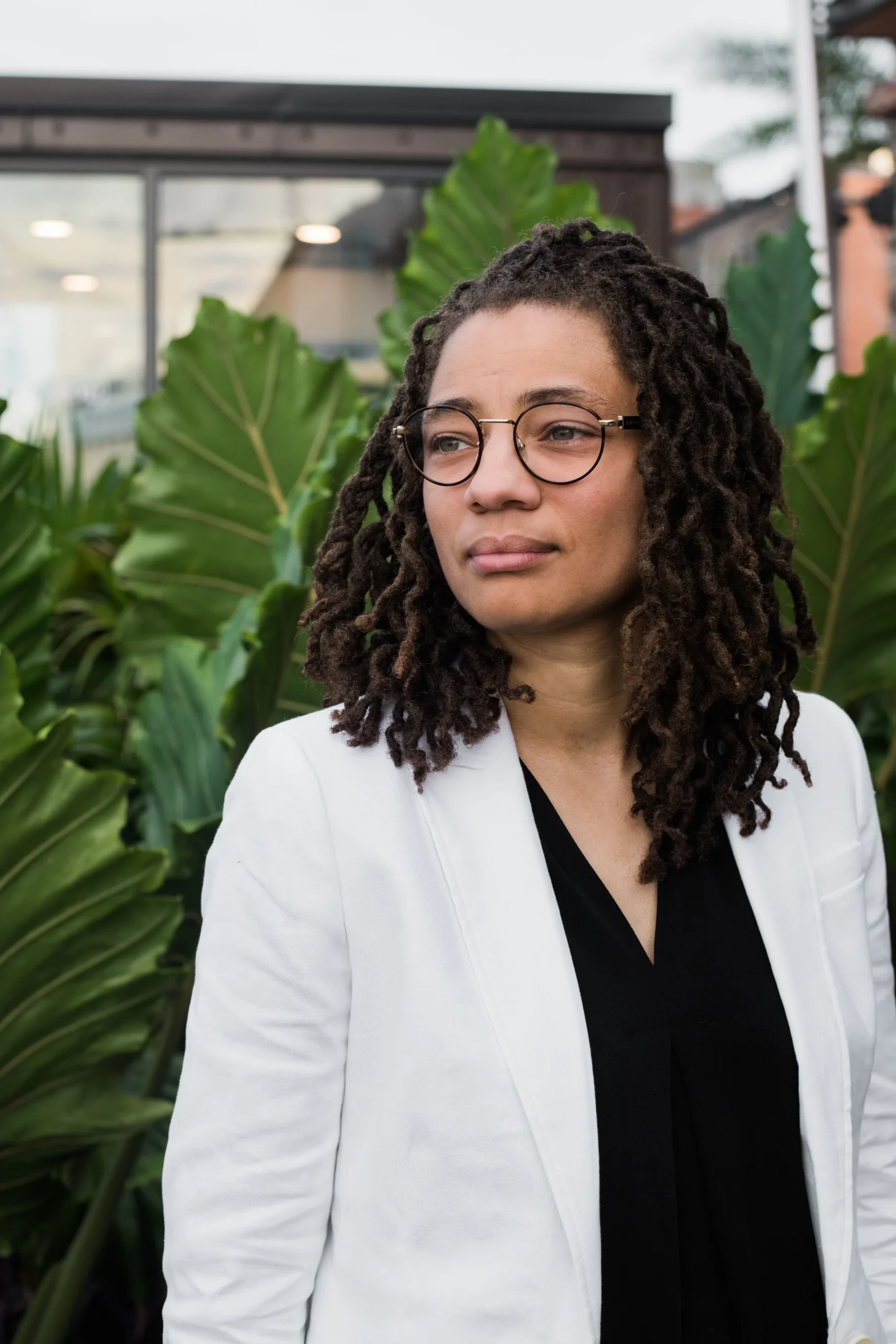
Dr. Shari Mackinson
GuestDr. Shari Mackinson is a scholar of religion and ethics whose work centers on justice for marginalized communities, with a particular focus on mass incarceration. She currently serves as Morehouse-BPI Faculty Fellow and Director of the AYC-HEP. A proud alumna of Howard University, Dr. Mackinson also holds dual master’s degrees in Public Health and Social Work from the University of Michigan, Ann Arbor. After nearly a decade with Georgia’s Department of Family and Children Services, she returned to graduate study at Emory University, earning a Master of Divinity and a Ph.D. in Religion with a concentration in Ethics. While at Emory, she directed the Certificate in Theological Studies Program at Arrendale State Prison for Women, where she deepened her commitment to educational access and transformative justice. Prior to joining AYC-HEP, she was Assistant Professor of Religion, in U.S. Christianities, at Texas Christian University. Dr. Mackinson approaches her research through Black Feminist/Womanist and Postcolonial ethical frameworks. She is excited to return home to Georgia and offer the transformative power of HBCU education to incarcerated individuals, continuing her work at the intersection of theology, ethics, and liberation.
Connect with Dr. Mackinson
Dr. Shari Mackinson is an ethicist and educator whose work connects religion, education, justice, and the experiences of incarcerated individuals.
She earned a Master of Divinity and PhD in religion from Emory University and holds graduate degrees in public health and social work.
Her professional experience includes prison chaplaincy, theological education inside women’s correctional facilities, and higher education programming for incarcerated students.
Learn more about Dr. Shari Mackinson:
Andrew Young Center for Global Leadership
https://andrewyoungcenter.org/shari-mackinson
Listen, Watch, and Share
Watch the full conversation, listen on your preferred podcast platform, and share this episode with someone interested in mental health, theology, or creating healthier faith communities.
Podcast Episode Quotes
“Whether you think you do or not, you know someone who’s affected by incarceration.” – Dr. Shari Mackinson
“What might be Christ-like in that moment might be meeting a more tangible need.” – Dr. Shari Mackinson
“It gives you language to describe the world around you.” – Dr. Shari Mackinson
“It also opens up new ways of looking at the world that can be freeing by itself, right? That’s the liberation.” – Dr. Ca Trice Glenn