

In this episode of The TheoTherapist Podcast, host Dr. Ca Trice Glenn welcomes clinical psychologist, researcher, and bestselling author Dr. Rheeda Walker for a candid conversation about Black mental health, faith, psychological fortitude, and breaking free from stigma and shame.
The TheoTherapist Podcast, where we explore the intersections connecting theology and mental health. The TheoTherapist podcast is hosted by Dr. Ca Trice Glenn, a practical theologian and licensed therapist.
Episode Timeline
00:25 Welcome to The TheoTherapist Podcast
00:50 Introducing Dr. Rheeda Walker
02:25 Faith and Mental Health Care Working Together
03:11 Why Black Mental Health Must Be Unapologetic
04:17 Addressing Mental Health Stigma in Black Communities
05:22 Faith, Spirituality, and Black Resilience
06:55 Recognizing Spiritual Strength in Therapy
07:56 Religious Coping and Emotional Wellness
09:01 Understanding Psychological Fortitude
10:26 Measuring Psychological Fortitude on a 0–10 Scale
11:26 Faith as a Source of Psychological Strength
11:52 The Emotional Weight of Caring for Everyone
13:47 Hidden Struggles, Low-Key Depression, and Appearing Strong
15:27 Recognizing When We Carry Too Much
16:07 Rest, Sabbath, and Emotional Wellness
17:38 Suicide Prevention and Protective Factors
19:53 What Church Leaders Need to Know About Mental Health
20:43 Faith, Therapy, and Practical Coping Skills
22:16 Recognizing Limits and Making Mental Health Referrals
23:05 Mental Health Advocacy from the Pulpit
24:12 Encouraging Therapy and Reducing Stigma
25:25 Culture, Identity, and Community as Protective Factors
26:14 Checking In and Offering Practical Support
28:25 Overcoming the Strong Black Woman Myth
28:54 Why Asking for Help Is Strength
29:59 Courage, Healing, and Final Reflections
What does it mean to prioritize your mental health unapologetically, especially when faith, cultural expectations, and the pressure to remain strong influence how you navigate life’s challenges?
In this episode of The TheoTherapist Podcast, host Dr. Ca Trice Glenn welcomes renowned clinical psychologist, researcher, and author Dr. Rheeda Walker for an insightful conversation about Black mental health, spirituality, psychological fortitude, and the importance of breaking free from stigma and shame.
Drawing from her book, The Unapologetic Guide to Black Mental Health, Dr. Walker explores how faith can serve as a powerful source of resilience while emphasizing that spiritual strength and professional mental health care are not mutually exclusive.
Together, they examine the emotional burdens associated with the “Strong Black Woman” myth, the tendency to mask distress behind expressions like “I’m blessed and highly favored,” and the importance of recognizing when strength means asking for help rather than carrying everything alone.
Dr. Walker also introduces her concept of psychological fortitude, encouraging listeners to assess their emotional capacity, acknowledge their limitations, and identify practical ways to strengthen their well-being. The conversation addresses the importance of rest, suicide prevention, community connection, and the responsibility of faith leaders to recognize mental health needs and connect individuals with appropriate support.
In this episode, you’ll discover:
- How faith and mental health care can work together to support emotional wellness.
- What psychological fortitude means and how to assess your capacity on a 0–10 scale.
- Why the expectation to always appear strong can negatively affect Black women’s mental health.
- How rest, spiritual practices, and healthy boundaries support emotional well-being.
- The importance of mental health awareness, suicide prevention, and community support.
- How churches and faith leaders can create environments that encourage help-seeking and healing.
- Why practical support and meaningful connection are essential to caring for one another.
A central takeaway from this conversation is that seeking help is not a failure of strength. It is an expression of strength.
Whether you’re a faith leader, mental health professional, caregiver, or someone learning to prioritize your own well-being, this episode offers practical insights and encouragement for pursuing emotional wellness without stigma or shame.
Podcast Host

Rev. Dr. Ca Trice Glenn, LPC, ACS
HostThrough counseling, consulting and training, Dr. Glenn shares her passion for wellness and balance. Over the last 20 years, she has held leadership positions in the entertainment, corporate, information technology and counseling fields. In addition to her professional experience, she also lives out her life’s vocational calling as an ordained minister. Dr. Glenn uses her gifts to educate and care for others seeking holistic wellness. Through counseling, consulting and training, Dr. Glenn shares her passion for wellness and balance.
Guest

Rheeda Walker, PhD
GuestDr. Rheeda Walker is an award-winning professor of psychology, fellow in the American Psychological Association, and author of the best-seller, The Unapologetic Guide to Black Mental Health. She is also an expert scholar who has published more than 70 scientific papers on African American mental health, suicide risk, and emotional resilience. Dr. Walker’s expertise has been cited in countless media outlets including the Washington Post, Los Angeles Times, and NPR. She has also been a frequent guest expert on Good Morning America and the syndicated Breakfast Club radio show. She is well known for engaging audiences to advance emotional wellness.
Connect with Dr. Rheeda Walker
Website: RheedaWalkerPHD.com
Instagram: @dr.rheedawalker
Books: The Unapologetic Guide to Black Mental Health and The Unapologetic Workbook for Black Mental Health
Explore her books: https://www.rheedawalkerphd.com/book
The TheoTherapist Podcast
“God rested.” – Dr. Rheeda Walker
“Where do you get your strength from?” – Dr. Rheeda Walker
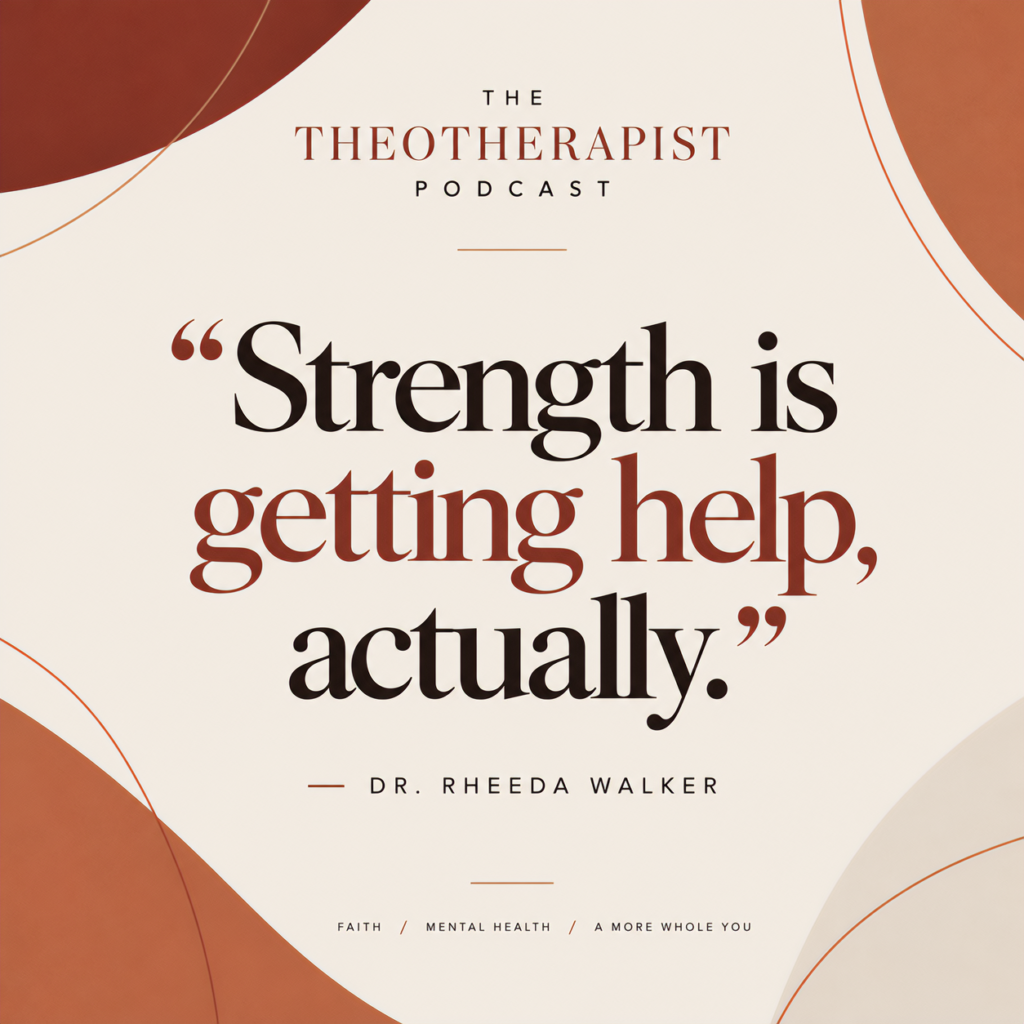
“Strength is getting help, actually.” – Dr. Rheeda Walker
“It takes help to reach out for help.” – Dr. Ca Trice Glenn